
AI in recruiting: How to master CV parsers and tests in 2025
 Viktor Fink
When machines select: New rules of the game in the application process
Artificial intelligence has taken recruiting to a new level in recent years. In the IT sector in particular, more and more companies are using automated CV parsers, AI-supported assessments and intelligent matching algorithms as an integral part of the selection process. These technologies make application processes more efficient, but also present applicants with new challenges. If you want to keep pace with this change, you will benefit from knowing how these systems work in detail and adapting your own application process accordingly. The HR department no longer evaluates the documents first - an algorithm often makes the pre-selection and decides whether a CV should be considered at all.
Today, IT specialists in particular experience digitalised selection steps almost without exception. A sound understanding of the underlying mechanisms offers the opportunity to optimise application documents in a targeted manner. With a view to future application processes, it is worth taking a closer look at the working logic of modern AI solutions in recruiting, the functional principle of CV parsers and the handling of automated assessments. The following recommendations contain practical methods, current developments and helpful formulation examples to specifically prepare for these processes.
CV 2.0: How AI parsers read your CV
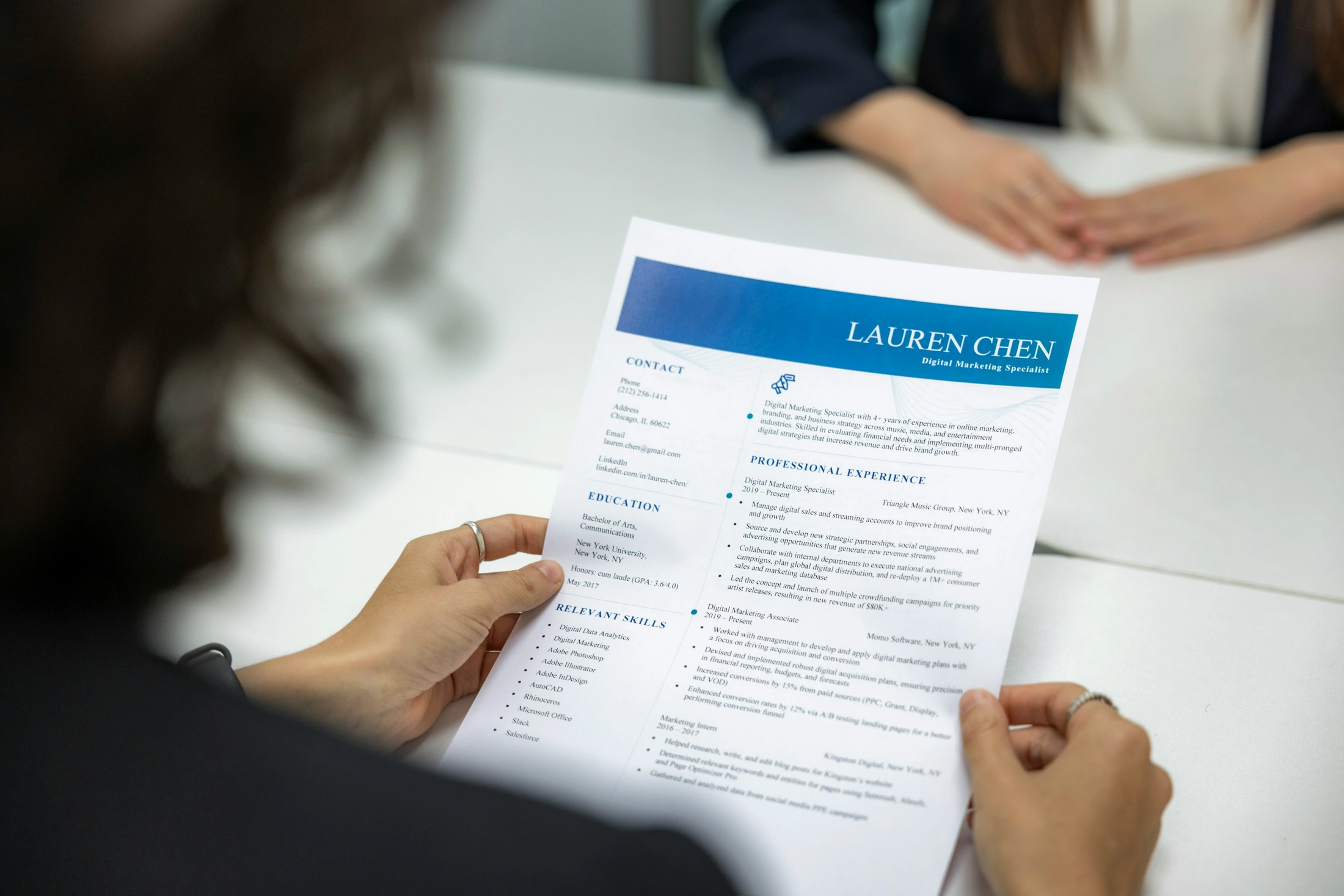
Digital CV parsers have long been standard in modern recruitment processes. They automatically analyse CVs, identify qualification patterns and extract key skills, which are then matched with job requirements. For example, the system specifically searches for certificates in cloud computing or programming experience with certain languages such as Python. These processes are largely automated and take just a few seconds. Despite the high precision of the AI-based parsing tools, it is advisable to observe a few basic rules regarding the structure and design of your own documents.
Companies in the IT sector often rely on specialised parsers such as Textkernel or JoinVision as well as internal solutions. The semantic analysis assigns qualifications to suitable categories. A clear, well-organised presentation is essential for this. A tabular CV with unambiguous headings and clear time information supports machine readability and increases the chances of successfully passing the pre-selection process. You should be careful with graphic elements or creative layouts, as important information can easily be overlooked if the system interprets content as images.
The greatest possible precision is recommended when formulating information. An entry such as "Development and implementation of REST APIs with Spring Boot (2019-2023), lead developer in project X, specialised in continuous integration and deployment (Jenkins, GitLab CI)" summarises key skills succinctly. Specific projects, tools or methods used provide a parser-friendly context. In the IT environment, the use of standardised technical terms is advantageous - the use of "JavaScript" instead of an abbreviation such as "JS" facilitates classification. Bullet points are particularly easy to process, especially when different activities or projects are presented.
Soft skills such as the ability to work in a team or communication skills are recognised by some AI solutions, but their influence is usually limited in the initial screening. Priority is given to technical qualifications, degrees, relevant certificates such as Scrum, AWS or Cisco and the description of practical experience. A standardised and comprehensible presentation of these characteristics increases the visibility of your own strengths in the automated pre-selection process.
AI-based tests: understanding automated hurdles as an opportunity
Following successful CV parsing, many companies use automated assessments. These include, for example, technical tests or coding-based tasks. These tests are used to check technical skills as well as to analyse soft skills such as problem-solving ability, learning behaviour and analytical thinking. Although some candidates find these procedures unfamiliar, they enable an objective assessment and reduce the influence of personal relationships on the result.
Common formats in IT recruiting are online coding assessments via platforms such as Codility, HackerRank or Coderbyte. Typical tasks include the following: "Write a function for email validation." The assessment is not only based on functionality, but also on efficiency and code quality. Advanced AI systems also pay attention to the approach, such as recognising patterns and dealing with algorithms. In order to be optimally prepared, it is advisable to familiarise yourself with the test platform in advance and simulate real-life conditions with the help of freely available online exercises.
AI-supported personality tests, also known as pre-employment assessments, are becoming increasingly important. Here, the applicant answers multiple-choice questions or gives short free-text answers, which the AI uses to analyse the fit with the corporate culture and team. Authenticity is just as important as targeted reference to company-relevant values. For example, when asked: "How do you deal with unexpected technical problems?", it is advisable to refer to real situations from your own projects, such as: "During the implementation of log management with the ELK Stack, I was able to systematically localise errors that occurred and rectify them quickly." The software recognises patterns in response behaviour and compares them with the desired company requirements.
Asynchronous video interviews are also increasingly subject to AI-supported analysis. Characteristics such as facial expressions, choice of words and pace of speech are included in the analysis of social skills. For applicants, this means that short, structured answers and a confident demeanour in front of the camera strengthen the profile generated by the AI and improve their chances throughout the selection process.
Practical strategies: react correctly and score points
If you want to be convincing in AI-supported recruiting, it makes sense to familiarise yourself with how the systems used work. Authenticity and comprehensible content take centre stage. Excessive optimisation of the CV or an excess of buzzwords in the cover letter have a less positive impact than a consistent argument with comprehensible examples. Candidates who merely list "Python" as a skill but do not provide evidence of any specific projects often take a back seat to competitors with demonstrable experience.
A relevant section in the cover letter could read: "During my three years as a data engineer in the automotive sector, I developed big data solutions with Python and Spark, implemented a data pipeline on AWS and realised new ML models." Such descriptions are specific and give the AI and HR departments a clear picture of your skills. Generalisations should be avoided. Instead of empty phrases, specific examples are more convincing: "As part of my studies, I developed an open source tool for analysing network data and won a regional hackathon with it."
Targeted preparation includes familiarity with the recruitment tools used by the desired company. It is certainly worth asking in advance which software solutions are used for assessments. This information enables customised preparation. Discussions in specialised online communities such as GitHub Discussions or Stack Overflow also offer insights into typical questions and help to prepare effectively for the automated selection process.
In the current recruiting environment, continuously updated portfolios - for example on GitHub or GitLab - as well as certificates from providers such as Coursera, edX or Udacity expand your own opportunities to stand out. Such evidence should be included in a prominent position in the CV, ideally as a hyperlink, so that automated systems can also reliably record it. In addition, short project descriptions, voluntary work or contributions to open source projects have a firm place in the IT CV and are valued by many companies.
A visible interest in digital selection methods can be emphasised in the final sentence of an application: "I would be happy to demonstrate my specialist knowledge as part of an assessment or technical test." This signals openness and a willingness to use modern recruiting methods.
Outlook for the future: How AI recruiting is evolving
Innovative companies are already integrating large language models (LLMs) for the automated analysis of CVs or using cognitive test procedures to recognise interdisciplinary strengths. The further development of the systems enables an increasingly differentiated assessment of both the professional skills and the learning potential of applicants. Those who confidently manage the media shift from traditional CVs to digital processes emphasise flexibility and adaptability - skills that are increasingly in demand in today's IT recruiting.
By 2025, the focus in AI recruiting is likely to shift further towards individual development opportunities and the potential for continuous professional development. Companies are increasingly focussing on the willingness to learn and personal initiative in professional development. It is therefore advisable to include upskilling courses, active involvement in open source projects or other professional development visibly in the application documents. Those who convey a willingness to learn and flexibility in every application phase demonstrably improve their chances.
Conclusion: Score points with expertise and authenticity
AI-supported recruiting processes will play a significant role in personnel selection in the future and are already characterising everyday application processes today. An understanding of how automated selection systems work, specifically prepared documents and an openness to new assessments offer a clear advantage in the IT application process. Those who present technical expertise in a targeted manner and familiarise themselves with digital tools will secure important plus points for the next step in their career.